Mockly
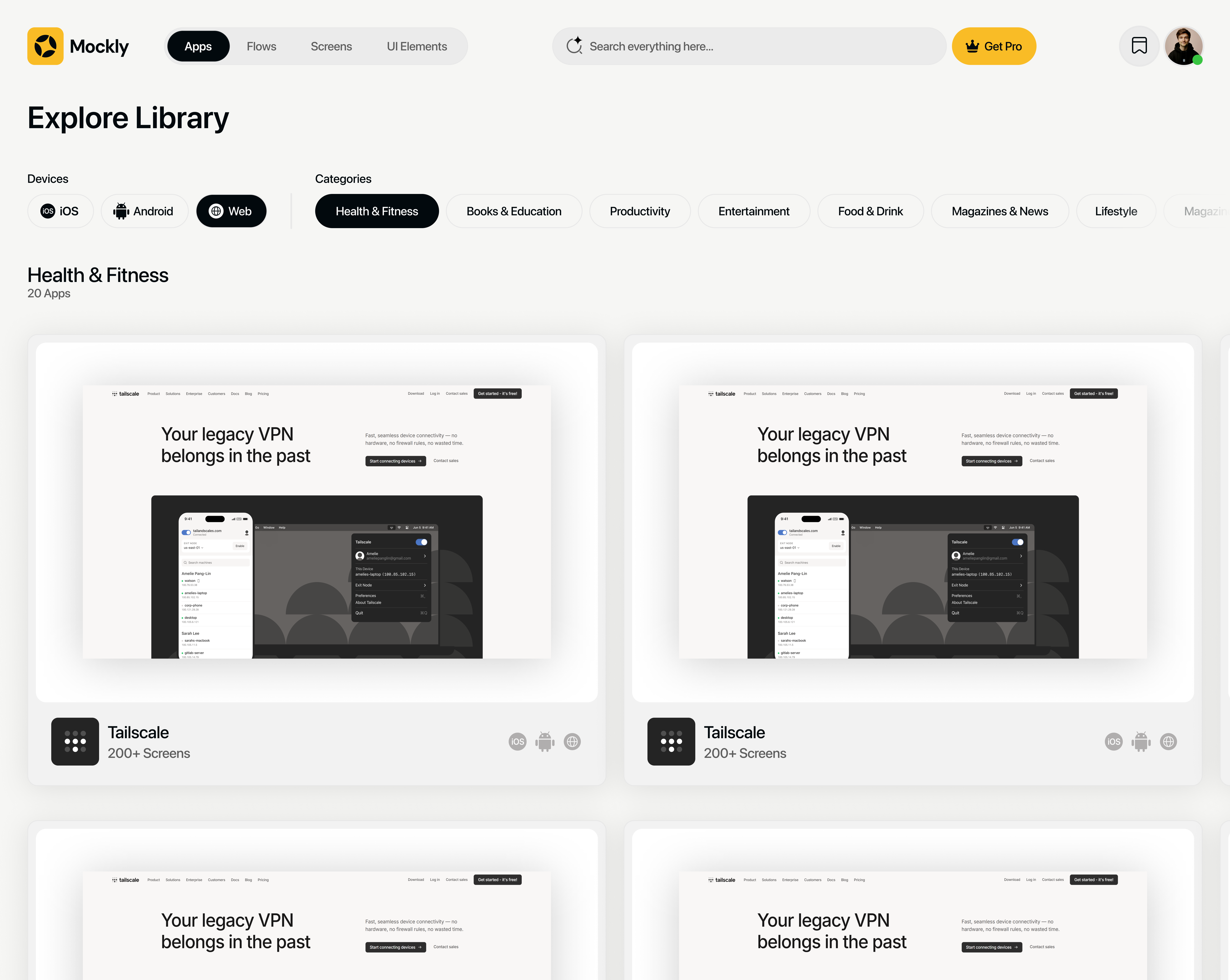
Mockly is an AI-powered design inspiration platform that autonomously discovers, understands, and indexes real-world UI to deliver fast, intent-driven search for product designers.
Visit websiteThe Challenge
Product designers lacked a living, navigable reference for real-world interface inspiration. Existing platforms were cluttered with unrealistic experiments, outdated design systems, or rigid keyword-based search that failed to capture layout intent and interaction nuance.
Mockly needed to become a self-evolving UI library, capable of autonomously discovering new interfaces, understanding them semantically, and making them searchable through natural, design-centric queries like “card-based checkout” or “clean fintech dashboards.”
Autonomous UI Discovery
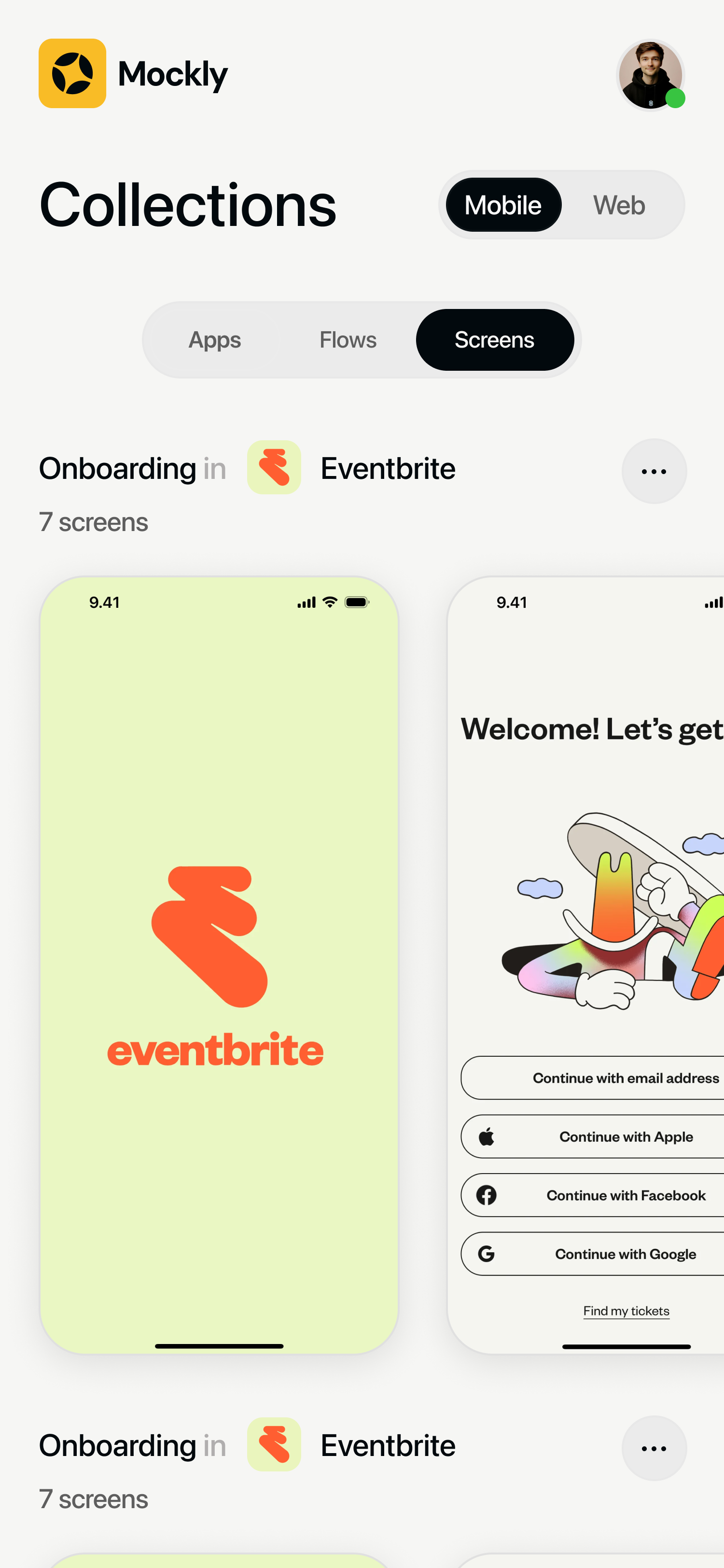
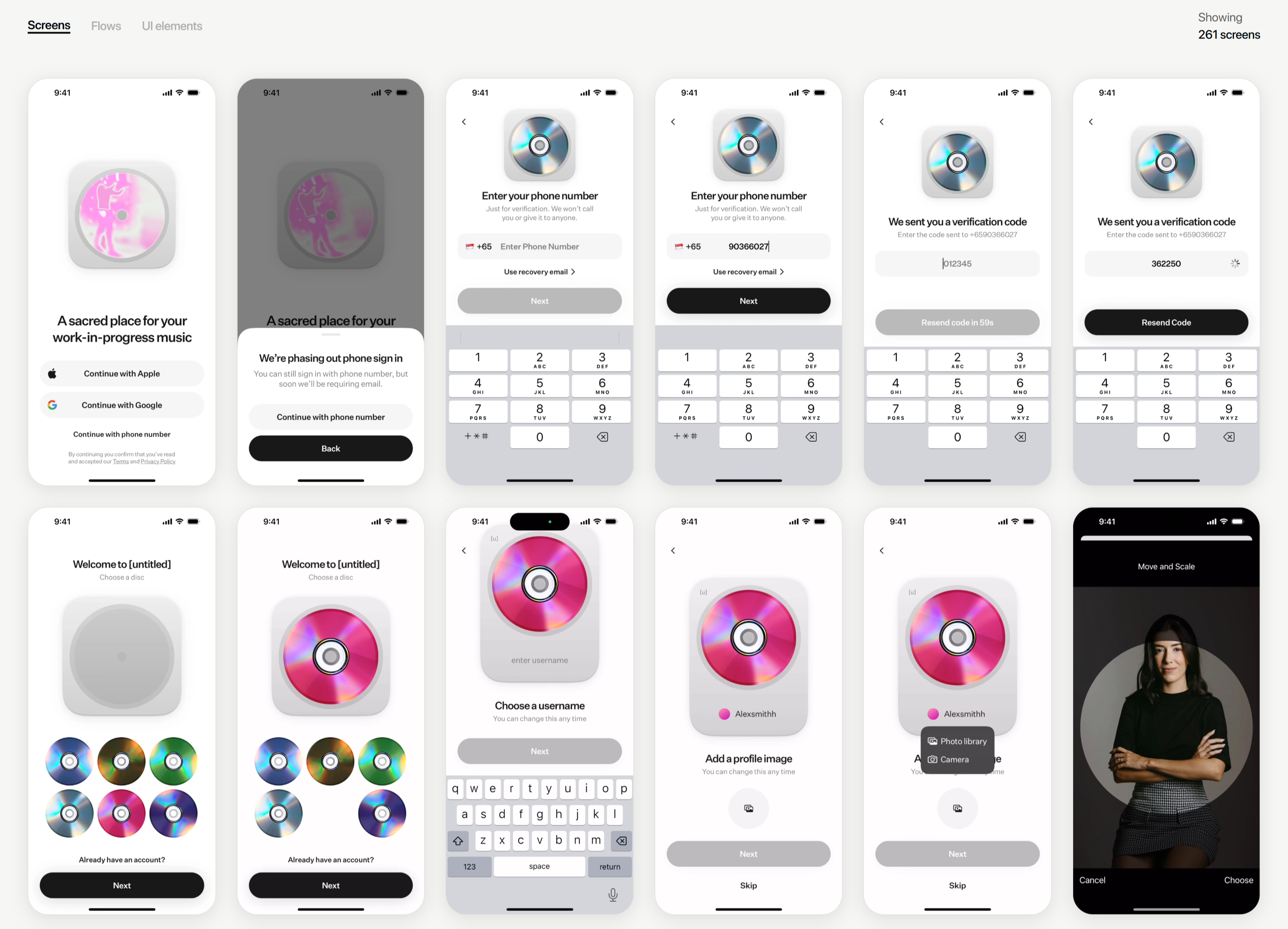
We engineered an agentic crawling system capable of navigating real products and websites like a power user - logging in, progressing through flows, detecting state changes, and capturing meaningful interface screens without getting stuck in loops.
The automator’s responsibility was clean acquisition only. Reliable, structured capture allowed downstream AI systems to focus purely on interpretation and indexing.
AI-Generated Interface Understanding
Each captured screenshot is processed through an LLM-powered pipeline that generates structured descriptors including layout hierarchy, component types, flow purpose, brand tone, and interaction patterns.
Terminology normalization ensures semantic stability as new content is continuously ingested, allowing Mockly’s knowledge base to scale without drifting in meaning.
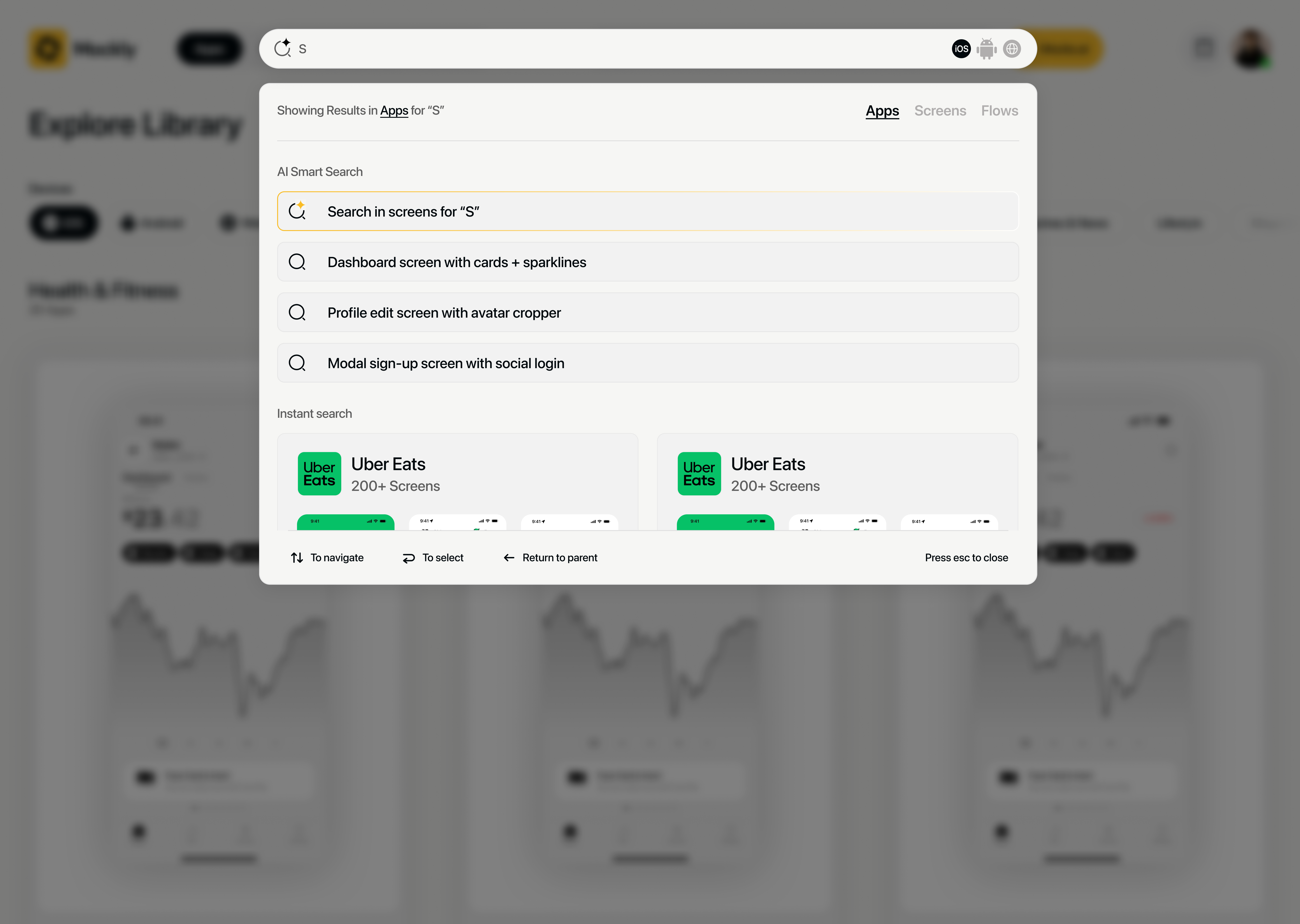
Vector-Based Smart Search
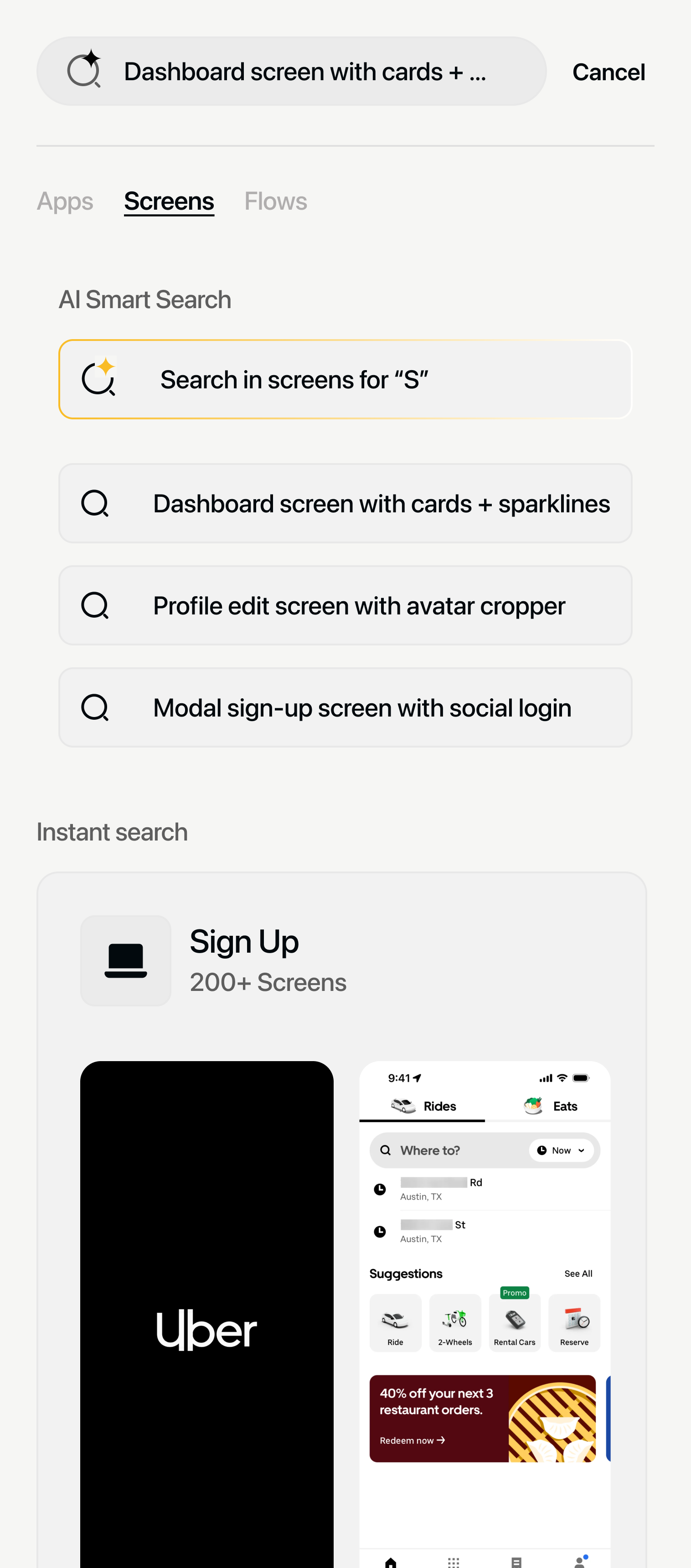
Content is embedded and indexed using Azure AI Search with hybrid retrieval (vector + keyword) and semantic ranking. The system is tuned for intent-led queries rather than literal keyword matching.
Designers can search using natural language and receive relevant, comparable references under tight latency constraints - even as the library grows at scale.
Quality, De-duplication & Platform Ops
As ingestion scaled, strict de-duplication, resolution checks, and safety screening pipelines ensured catalogue quality. Relevance tuning and analytics continuously optimized precision and recall.
The result is a trustworthy, high-signal UI library that remains current without requiring manual curation.