Stage 01 / 04 · Capture
Find meaningful states
An agentic layer navigates products and records meaningful interface states. Acquisition stays separate from later interpretation.
Product flow → captured state
Interface evidenceCase study · № 004 · AI design search
An AI-powered design reference platform that discovers real interface states, describes their structure, and retrieves them through natural design language.
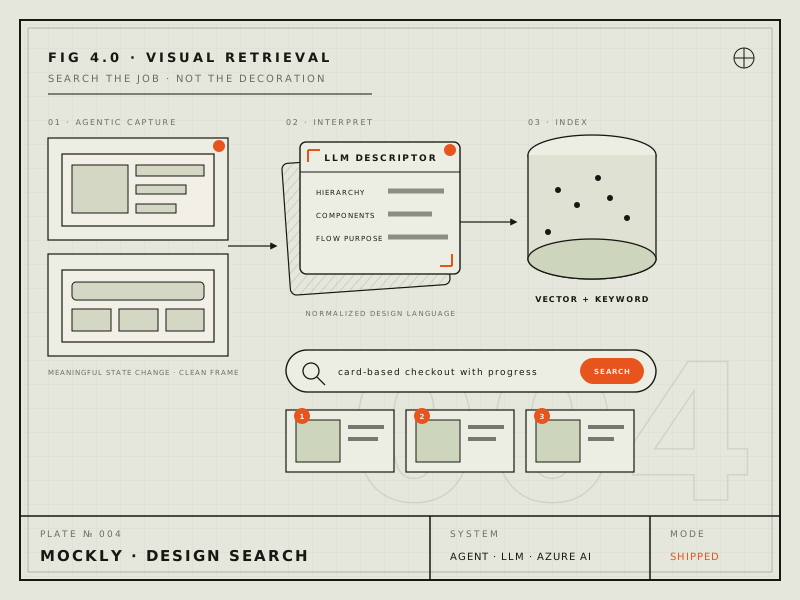
Search for the job an interface does.
Designers needed references from real product flows, not isolated concept shots. Keyword tags could not express layout intent, interaction patterns, or the difference between two visually similar screens serving different jobs.
Interactive field notes / system map
Stage 01 / 04 · Capture
An agentic layer navigates products and records meaningful interface states. Acquisition stays separate from later interpretation.
Stage 02 / 04 · Describe
An LLM pipeline describes hierarchy, components, flow purpose, tone, and interaction patterns using normalized language.
Stage 03 / 04 · Index
De-duplication, resolution checks, and safety screening help protect catalogue quality before retrieval.
Stage 04 / 04 · Retrieve
Azure AI Search combines vectors, keywords, and semantic ranking so design language can retrieve interfaces by purpose and structure.
A screenshot needs context.
The crawler captures clean evidence; later systems decide what it means.
A growing library becomes less useful if equivalent patterns drift into incompatible labels.
Queries such as “card-based checkout” should match interface purpose and structure.
The product architecture and Hashaam's design/front-end role are documented on his public case study. Source code, ingestion scale, latency, and search-quality metrics are not public, so this case focuses on product thinking and system shape rather than invented results.