Stage 01 / 04 · Observe
Start with the plant
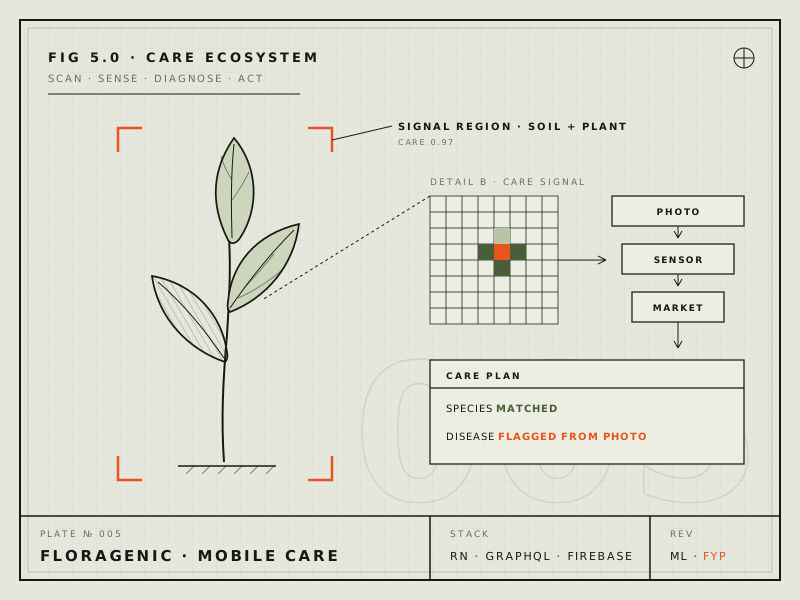
Photo-based identification and disease diagnosis connect the mobile client to an analysis service. Live soil readings add environmental context.
Photo + soil readings → insights
Visual + sensor inputsCase study · № 005 · 2022 to 2023
A mobile plant-care ecosystem connecting visual diagnosis, live soil readings, products, nurseries, gardeners, payments, and ongoing care.
The scan is only the beginning.
Plant care is fragmented across species research, disease diagnosis, soil readings, supplies, local nurseries, and professional help. Beginners often discover problems only after visible damage appears.
Interactive field notes / system map
Stage 01 / 04 · Observe
Photo-based identification and disease diagnosis connect the mobile client to an analysis service. Live soil readings add environmental context.
Stage 02 / 04 · Understand
Species, care, growth, and treatment information give the user a way to interpret the plant and its environment.
Stage 03 / 04 · Act
Products, nursery discovery, and gardener booking extend the journey beyond diagnosis into practical care actions.
Stage 04 / 04 · Connect
The React Native client coordinates GraphQL, Firebase, payments, images, sensors, and the analysis service across the care journey.
Insight should lead somewhere useful.
Diagnosis is more useful when the next actions, products, readings, or people are in the same product.
Hashaam's public code shows the client coordinating GraphQL, Firebase, payments, images, sensors, and the analysis service.
The public Flask/TensorFlow repository's commits belong to a collaborator, so this case claims Hashaam's mobile client and integration work, not sole authorship of the ML backend.
The public repository documents a substantial React Native client across commerce, service booking, plant scanning, and IoT workflows. The current case study presents a broader product vision; scale claims are intentionally omitted until they can be independently supported.