Stage 01 / 04 · Capture
Two modes, two expectations
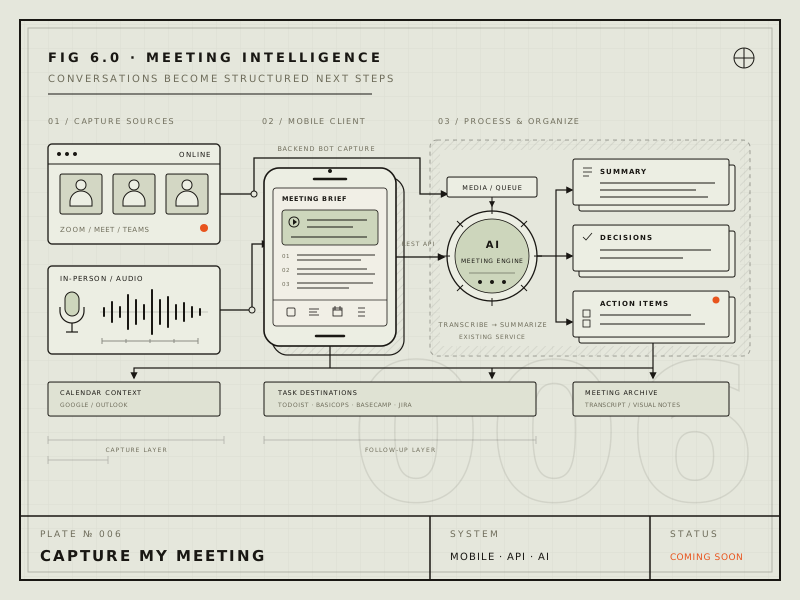
Online meetings use existing backend bot infrastructure. In-person meetings use phone audio capture, requiring a distinct mobile entry flow.
Project preview · № 006 · Coming soon
A React Native companion for an AI meeting assistant, bringing meeting summaries, transcripts, decisions, calendars, and task integrations into one iOS and Android experience.
A conversation ends. The work continues.
A meeting continues after the conversation ends. People need to revisit what was said, find decisions, track action items, and connect that work to their calendars and task tools. The mobile experience brings those follow-up activities into one place.
Interactive field notes / system map
Stage 01 / 04 · Capture
Online meetings use existing backend bot infrastructure. In-person meetings use phone audio capture, requiring a distinct mobile entry flow.
Stage 02 / 04 · Process
The mobile app connects to existing meeting-processing APIs. Transcription and AI generation remain backend responsibilities.
Stage 03 / 04 · Understand
Summaries, transcripts, decisions, todos, next steps, and visual notes support different ways of revisiting a meeting.
Stage 04 / 04 · Follow up
Calendar views and task integrations connect meeting follow-up to the tools people use to organize their work. Availability depends on release and backend readiness.
Different capture modes. Clear next steps.
Online meetings use the existing backend bot infrastructure; in-person meetings use the phone microphone. Each mode needs its own mobile flow and recording expectations.
Summaries, transcripts, decisions, and action items serve different follow-up jobs, so meeting details present them as distinct views.
The mobile client connects to existing authentication, meeting processing, billing, and integration APIs. Transcription and AI generation remain backend responsibilities.
The app uses bare React Native and TypeScript with React Navigation and NativeWind. TanStack Query manages server data and processing-status polling, Zustand handles local UI state, and Axios connects the client to the existing REST API. Secure token storage and native Google and Apple sign-in support the mobile authentication flow.
Coming soon. The mobile app is in development, with release validation and backend-dependent capture and integration work still in progress. This preview focuses on the mobile experience; the existing web product, meeting bots, and AI processing are separate services.