Stage 01 / 04 · Learn
Build the foundation
Theory is organized by vehicle and licence category, chapter, and topic. Six localized interfaces include RTL-aware Urdu layouts.
Licence category → chapter → topic
6 locales · Urdu RTLCase study · № 007 · Mobile EdTech
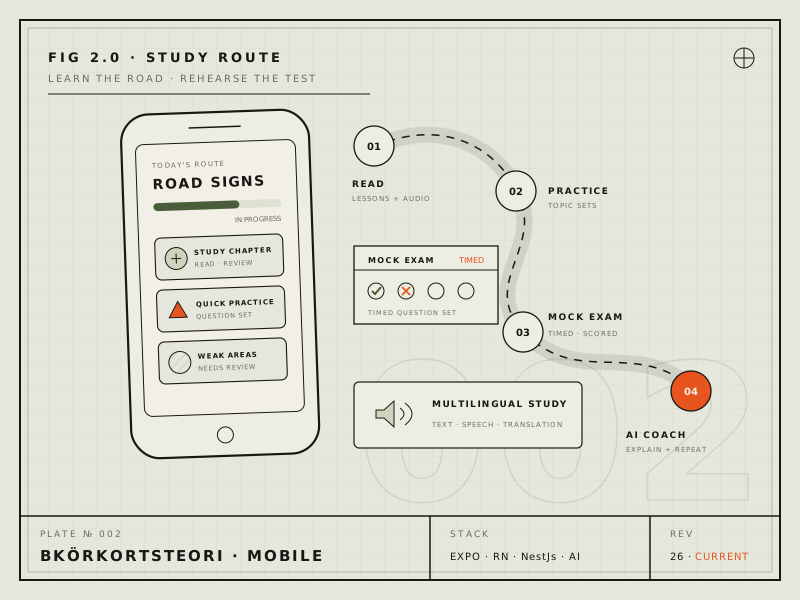
A multilingual mobile learning product that carries drivers from theory chapters through focused practice, realistic timed exams, review, and AI-supported coaching.
Mistakes should tell you what to study next.
Driving-theory preparation is not one quiz. Learners need structured reading, category-specific practice, an exam-like test environment, explanations after mistakes, and a clear view of what to study next. The product also has to serve learners across languages and text directions without fragmenting the experience.
Interactive field notes / system map
Stage 01 / 04 · Learn
Theory is organized by vehicle and licence category, chapter, and topic. Six localized interfaces include RTL-aware Urdu layouts.
Stage 02 / 04 · Rehearse
Relaxed chapter practice supports learning. Timed mock exams introduce scoring, flags, review, and category breakdowns.
Stage 03 / 04 · Review
The in-question tutor is enabled after an incorrect practice answer and uses the exact question, selected choice, and official explanation.
Stage 04 / 04 · Refocus
Weak-area analysis connects completed sessions to targeted chapter practice and optional streamed coaching. Exam timers reconcile with server time and app foreground changes.
Teach. Rehearse. Diagnose. Repeat.
Theory, practice, mock exams, review, and weak-area coaching form one learning loop rather than separate features.
The tutor is enabled after an incorrect practice answer, so its response can be grounded in the exact question, choice, and official explanation.
The interface handles native labels, country context, speech-language fallbacks, and right-to-left behavior instead of treating translation as string replacement.
Timers reconcile with server time and app foreground changes so a mock test remains credible when the app is paused or resumed.
The supplied mobile repository establishes the product surface and implementation details, and its owner identified Hashaam as the developer. The archive does not include Git metadata, so individual commit history, team boundaries, dates, store release status, learner counts, and performance outcomes are intentionally not claimed. Production notes also show that some release integrations still require final configuration.